
Kabul urban identity reflects conflict, rapid urban development, and failed modernization.Kabul is one of the oldest and fastest-growing cities in the world, a critical hub with over 3,500 years of recorded history. Yet, its modern identity is defined by a staggering transformation: in just two decades, it has experienced a nearly ten-fold population increase, growing from 500,000 residents in 2001 to over five million today. This rapid Kabul urban development highlights one of the fastest urban expansions in the world. This rapid change has turned the city into a complex mosaic where the “glass palaces” of a new elite sparkle against a mud-brown landscape, reflecting a history that is constantly being erased and rewritten by successive regimes.
However, this transformation is not merely rapid—it reveals a deeper and recurring failure: modernization in Kabul has consistently been imposed as a top-down, exclusionary project that prioritizes symbolic progress over social reality. This reflects the broader challenges of modernization in Kabul and Afghanistan urban planning.
More critically, this transformation cannot be understood solely as failed planning; it must also be recognized as the cumulative outcome of conflict, where war has repeatedly acted as an unintentional yet highly effective force in shaping Kabul’s urban form.This process is often described as conflict urbanism in Kabul.
Yet, much of the existing analysis remains limited to describing these visible transformations, rather than interrogating their deeper implications. Without asking how these changes reshape social relations, identity, and everyday life, the narrative risks reducing Kabul’s urban evolution to a catalogue of forms instead of a critical explanation of its consequences.
This methodological limitation is crucial: it means that urban change is often treated as visual evidence rather than as a socio-political process. As a result, architecture becomes an object of description rather than a mechanism of power, exclusion, and cultural negotiation. This highlights the importance of understanding Kabul architecture beyond aesthetics.
Context: A City Built Through Cycles of Disruption
Kabul has served as the political capital of Afghanistan since 1776, a centrality of place that has attracted conquerors, traders, and political exiles for millennia. However, its urban importance predates this formal designation. Kabul first thrived significantly during the Babur era, when it functioned as a strategic and cultural capital within the early Mughal realm. During this period, the city was shaped not through rigid planning but through landscape-oriented development, gardens, and water systems that linked nature and settlement into a coherent spatial logic. This phase represents early sustainable urban planning in Kabul.
A key early urban intervention came later under Ali Mardan Khan, who developed the Char Chata Bazaar, introducing a covered commercial spine that structured trade, movement, and social exchange within the city. This bazaar became one of Kabul’s most important economic and civic infrastructures, organizing urban life through commerce and public interaction. However, this early urban continuity was violently disrupted during the First Anglo-Afghan War (1839–1842), when British forces set fire to parts of the Char Chata Bazaar and caused significant damage to surrounding commercial areas. This event marks an early example of war shaping Kabul urban development. The conflict also led to the destruction of the British military cantonment established outside Kabul, alongside the collapse of key administrative and defensive structures during the 1841 uprising. In parallel, parts of the Kabul citadel (Bala Hissar) and its surrounding urban fabric were damaged as the city became a site of uprising, siege, and counter-violence.
The Second Anglo-Afghan War (1878–1880) further intensified this pattern of urban disruption. Sections of the Bala Hissar fortress were again damaged during military confrontation and retaliation following resistance against British presence. Urban infrastructure, including movement corridors, gates, and surrounding residential zones, experienced repeated disruption due to shifting occupation and troop movements. These cycles illustrate how conflict repeatedly reshaped Kabul’s spatial structure. These interventions did not produce planned reconstruction but instead introduced cycles of instability that weakened existing urban systems and fragmented the continuity of Kabul’s spatial structure.
Some sources describe the city’s identity as a pattern of “alternating periods of fission and fusion,” where external pressures and internal migrations have continuously reshaped the social fabric. From the radical European-style modernization attempts of the early 20th century to the Soviet-era “model city” blocks, the brutal destruction of the civil war, and the recent international reconstruction era, Kabul’s urban identity has shifted from a small, elite-led town to a fragmented, ethnically segmented metropolis. This reflects the long-term evolution of Kabul urban identity. Yet, the existing narrative often treats these periods as disconnected phases; a more critical reading reveals a continuous pattern of repeated sociopolitical mistakes, where each wave of modernization reproduces the same exclusionary logic rather than learning from the past.
Equally important, these periods are often narrated as moments of loss, yet such a perspective overlooks a crucial analytical dimension: each episode of destruction did not simply erase the city, but actively reconfigured its spatial, social, and functional structure. This supports the idea of urban transformation in Kabul as an active process. This gap reflects a broader analytical weakness: the city’s transformation is too often framed as passive change rather than as an active process that redistributes power, reorganizes social interaction, and redefines who has access to urban space.
This also exposes a structural issue in urban interpretation: historical phases are frequently treated as separate “events,” when in reality they operate as cumulative layers. Each period of construction or destruction does not replace the previous one but restructures it, producing a palimpsest of competing urban logics that coexist in tension.
King Amanullah Khan Dream and European Influence (1919–1929)
King Amanullah Khan sought to build a capital dignified for a king, inspired by the technologies of Berlin, Paris, and London. He moved to replace the “maze of streets and bazaars” with sweeping roads, large parks, and the Darulaman Palace at the beginning of a green Vellay by planning as new city, which could be considered as the first effort of planning in Afghanistan. Which is a symbol of his vision for a modern nation. He built a series of European style palaces and gardens in a green lash valley of Paghaman, which served as a summer capital for the King. During this era, the government even mandated Western costumes and banned the veil (purdah) to force a European-style identity onto the population. However, these reforms were too radical for the traditional social system and eventually led to his exile.
This period represents one of the earliest examples of modernization in Kabul driven by top-down planning and Western influence.
This failure was not simply due to speed, but to the fundamentally exclusionary nature of modernization itself, which ignored local cultural realities and imposed an elite vision disconnected from the broader population.
More significantly, Amanullah Khan’s unrealized vision highlights a critical contrast: while formal, top-down planning failed to materialize, later periods of conflict would prove far more effective in physically reshaping the city—albeit through violent means rather than intentional design.
This contrast is central to understanding Kabul urban development and planning failure.
This contrast reveals a deeper analytical tension: symbolic planning projects often fail because they operate at the level of ideology rather than spatial enforcement, whereas conflict—despite its destructiveness—produces immediate and irreversible spatial consequences.
Cautious Modernization and Soviet Influence (1933–1992)
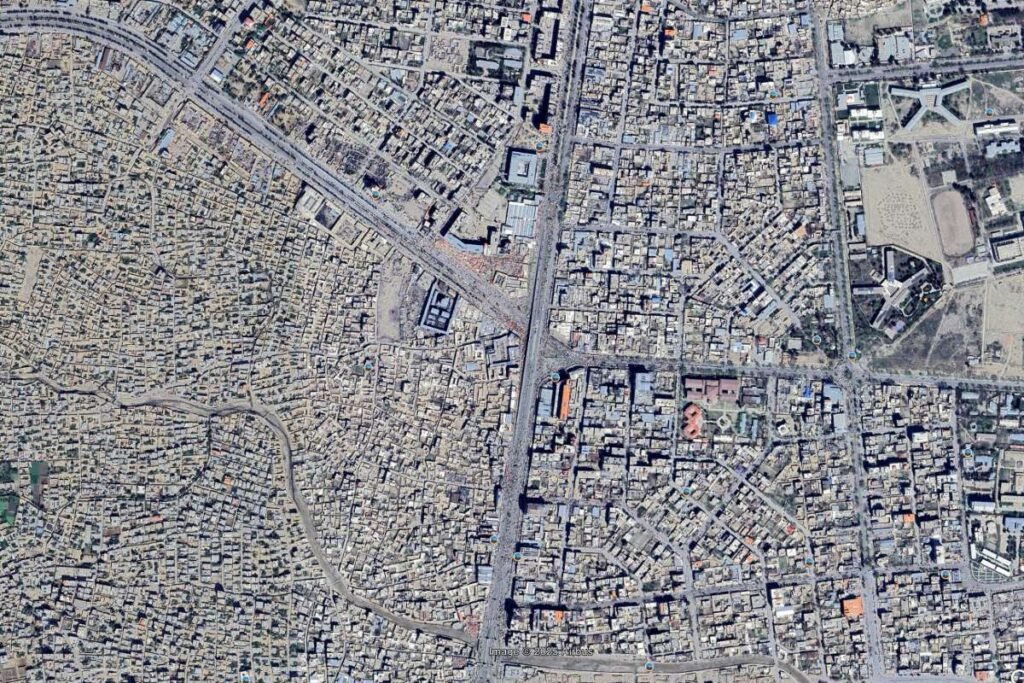
Successors Nadir Shah and Zahir Shah pursued a slower, more cautious modernization. In the mid-20th century, Kabul expanded into its rural surroundings with neighborhoods called Kartes, imitating French planning. The most significant shift came with Soviet investment, which introduced the Mikrorayan—massive five-story apartment complexes intended to change Kabul into a “Soviet model city”. These blocks became the favorite housing for a new class of Westernized and Soviet-educated elites, creating a divide between these “modern” residents and the rural population living in traditional mud farmhouses (qalas).
This phase highlights the impact of Soviet urban planning on Kabul’s spatial and social structure.
Rather than resolving earlier failures, this period reproduced the same pattern of elite-oriented development, further deepening social divisions and reinforcing the exclusion of the majority from the benefits of modernization.
Furthermore, the rigid, grid-based logic of Soviet planning—while symbolizing order and control—ultimately proved fragile, as these very structures later became strategic frontlines during conflict, demonstrating the vulnerability of imposed urban systems.
This demonstrates how urban form in Kabul can become an instrument of conflict.
This transformation underscores an important paradox: systems designed for stability can become instruments of conflict when they are detached from social legitimacy. Urban form, in this sense, is not neutral—it becomes politically activated when governance collapses.
Destruction and Polarization (1992–2001)
The fall of the communist regime in 1992 brought a sudden influx of mujahideen from rural areas, who introduced a new social identity characterized by traditional clothing and beards. However, political rivalry quickly descended into a civil war that turned central Kabul into a battleground, destroying 80% of the National Museum’s collection and forcing a mass exodus of the original urban “Kabulis”. The subsequent Taliban era (1996–2001) placed the city in a “vacuum,” where reconstruction ceased and the cultural identity was subjected to a puritanical Islamic mold, climaxing in the destruction of non-Islamic heritage like the Bamiyan Buddhas.
This period represents the most destructive phase of Kabul conflict, urbanism and urban fragmentation.
Yet, to interpret this period solely as devastation is analytically insufficient; the civil war did not merely destroy Kabul—it actively redesigned it. Frontlines, bombardments, and territorial control functioned as de facto planning tools, displacing populations, emptying central districts, and forcing the expansion of peripheral settlements.
War during this period acted as a powerful force shaping Kabul urban form.
In this sense, war operated as an unplanned but decisive urban designer, restructuring the city’s geography more forcefully than any formal master plan. War during this period acted as a powerful force shaping Kabul urban form.
This reframing is essential because it shifts interpretation from loss to production: destruction becomes a spatial force that reorganizes access, mobility, and settlement patterns. War is therefore not external to urbanism—it becomes one of its most powerful operational mechanisms.
Informal Expansion as Wartime Urbanism
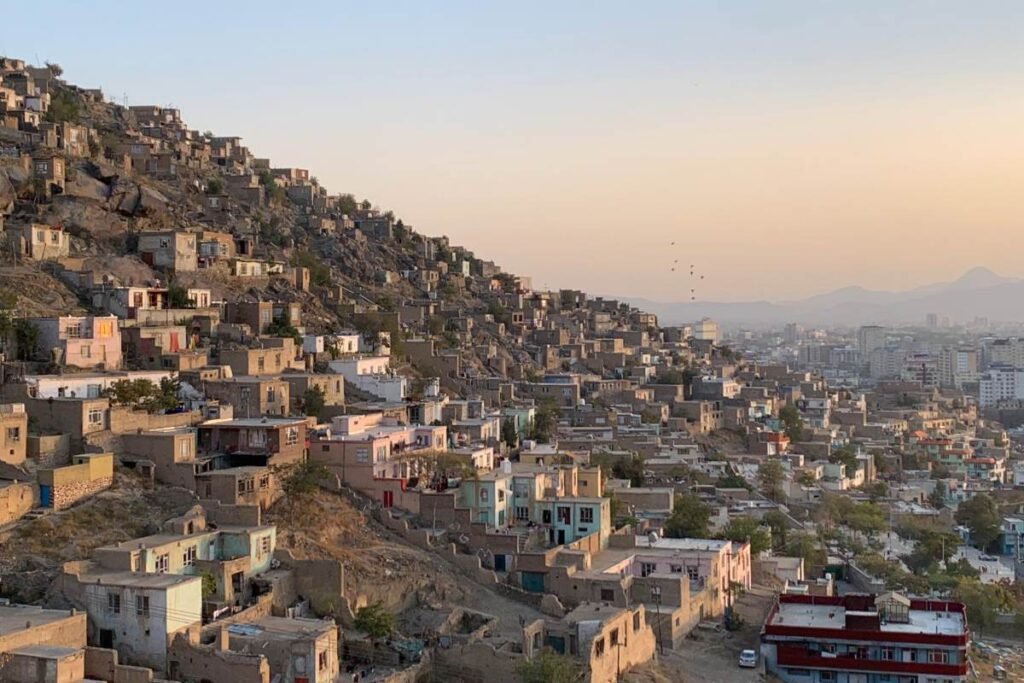
The emergence of informal settlements during and after this period must therefore be reinterpreted. Rather than viewing these hillside mud-brick neighborhoods merely as symptoms of poverty, they represent a direct spatial response to conflict and state failure. Residents, excluded from formal planning systems, effectively became the primary agents of urban development. Kabul informal settlements are a key feature of bottom-up urbanism and urban resilience.
The rapid, often overnight construction of these settlements—frequently in defiance of state demolition, where citizens claimed territory faster than the state could regulate it. This process reveals a form of bottom-up urbanism shaped by necessity, resilience, and conflict rather than policy.
When contrasted with the failure of formal housing projects, these informal systems demonstrate greater adaptability and permanence, ultimately defining Kabul’s contemporary urban footprint. This highlights the importance of informal urban development in Kabul city growth.
However, this should not be romanticized: while informal urbanism demonstrates resilience, it also reflects systemic exclusion. Its emergence is inseparable from the absence of equitable planning structures and the breakdown of formal governance capacity.
Post-2001 Reconstruction
Following the fall of the Taliban, Kabul became a magnet for millions of returning refugees and internally displaced persons. This period introduced a “new modernity” of huge glass facades and decorative ornaments, often commissioned by mujahideen commanders whose social status had improved during the wars. This architectural diversity reflects a conglomerate of identities—local, regional, and Western—all seeking to catch up with modernity while preserving traditional ways of life.
Post-2001 Kabul reconstruction reflects a new phase of urban development influenced by globalization and returning populations.
However, this phase must not be understood as a new beginning but as a repetition of Amanullah’s earlier vision: once again, modernization is driven by elites and external actors, producing spaces—such as fortified compounds and luxury developments—that remain inaccessible to the majority.This reinforces patterns of inequality in Kabul urban development.
This demonstrates a critical continuity: modernization in Kabul consistently prioritizes image and symbolism over inclusive infrastructure, reinforcing social alienation rather than reducing it.
At the same time, this era reveals that conflict did not disappear but transformed. The architecture of security—gated compounds, surveillance, and controlled access—reflects a lingering condition in which urban space continues to be shaped by fear, risk, and exclusion. Even the most modern developments remain embedded within a conflict-driven logic.
This indicates that post-war modernity is not a rupture but a continuation of wartime spatial logic, translated into economic and architectural form rather than military geography.
Key Insight: Fragmented Urban Identity
The most profound shift in Kabul’s identity is the movement away from a unified urban “Kabuli” social status toward a highly fragmented ethnic segmentation. Before 1979, being a “Kabuli” was a distinct urban identity defined by secular education and social status rather than tribal ties. Today, however, the city is subdivided into geographic communities based on the rural districts from which migrants originated. This “urbanization of the Qawm” means that residents now live in ethnic enclaves—Pashtun in the south, Tajik in the north, and Hazara in the west—often interacting with other groups only during rare school field trips. This reflects the fragmented urban identity of Kabul shaped by migration and conflict.
This fragmentation is not accidental but a direct consequence of failed modernization strategies that have consistently neglected social integration, further proving that top-down planning has been unable to produce a cohesive urban identity.
It also reflects the long-term spatial consequences of conflict-induced displacement, where patterns of settlement are shaped less by planning decisions and more by survival, migration, and security concerns.
Thus, identity in Kabul is not only socially fragmented but spatially encoded, meaning that ethnicity, migration history, and conflict exposure are physically inscribed into the urban structure itself.
Architectural Interpretation: A City of Contrasts
Today’s Kabul is visually defined by the contrast between traditional mud-walled compounds and modern glass-fronted buildings. Kabul architecture clearly reflects the tension between tradition and modernity.
This contrast should not be reduced to a stylistic difference; rather, it represents a fundamental ideological conflict between two opposing worldviews: one rooted in privacy (purdah) and inward-looking social life, and the other in Western ideals of transparency and openness.This duality is central to understanding modern architecture in Kabul.
The failure of modernization lies precisely in ignoring this cultural logic—attempting to impose transparency on a society that historically values controlled visibility and social protection.
However, treating these architectural forms as separate categories—traditional versus modern—obscures the reality that they coexist and directly confront one another within the same urban space. This separation limits the analysis by ignoring how architectural differences produce everyday social tensions rather than merely visual contrasts.
Even where glass architecture is adopted, it is often modified—through curtains, reflective materials, or spatial arrangements—to preserve privacy, demonstrating that local culture reshapes imported modernity rather than passively accepting it.
This reveals a critical misinterpretation of “modernity”: rather than representing a clean break from tradition, many contemporary buildings reproduce the same cultural logic of privacy and control through new materials. Tinted glass, for instance, does not create openness; it functions as a technologically advanced extension of the mud wall, maintaining invisibility while projecting an image of global modernity.
Moreover, contemporary architectural forms must also be understood as responses to prolonged insecurity: visibility, once associated with openness, has become a liability. As a result, modern materials such as tinted glass and fortified boundaries function not as symbols of transparency, but as mechanisms of protection shaped by decades of conflict.
At the same time, these structures intensify social division. Their controlled access, surveillance systems, and spatial isolation transform architecture into an instrument of exclusion, where the built environment actively separates elites from the broader population rather than integrating them.
This tension becomes most visible at the street level, where a traditional courtyard house and a multi-story modern structure may share a boundary. In such conditions, architecture is no longer neutral—it actively disrupts established social norms, particularly those tied to privacy and spatial hierarchy, producing a form of everyday cultural conflict embedded in the urban fabric.
Therefore, what appears as architectural contrast is in fact a continuous negotiation of power, visibility, and protection, where each building participates in redefining the boundaries of social interaction.
Why It Matters
This fragmented identity has created a significant “legitimacy deficit” for the government. When residents identify more with their local ethnic community or Qawm than with the city itself, compliance with public policies decreases. The sources argue that building a functional city requires closing this gap through “small wins”—visible municipal services like installing dustbins or traffic lights—which build more trust than large, failed infrastructure projects.
This also reveals a deeper issue: large-scale, top-down master planning has repeatedly failed to respond to local needs, suggesting that the problem lies not only in implementation but in the planning model itself.
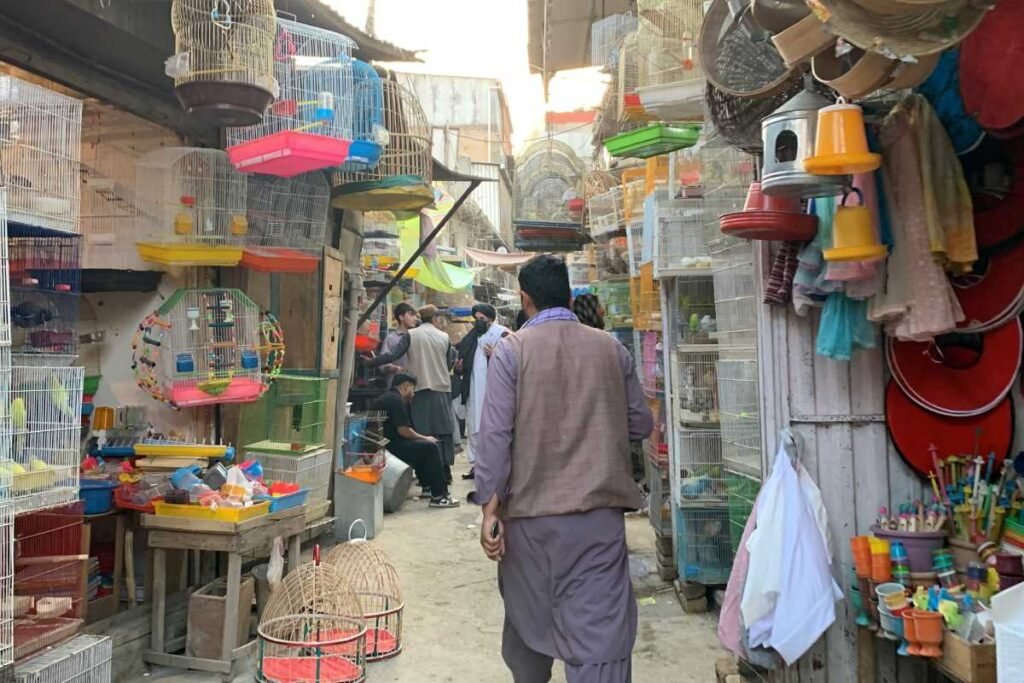
More fundamentally, the transformation of public space illustrates how modernization reshapes social life. Traditional urban environments such as bazaars once enabled interaction across social groups, functioning as inclusive civic spaces. In contrast, contemporary developments—particularly malls and secured commercial centers—operate as controlled environments that restrict access through economic barriers and surveillance.
This shift is not merely spatial but social: it replaces open, collective forms of urban life with privatized and exclusionary systems, redefining who belongs in the city and under what conditions.
Additionally, the persistence of informal systems and security-driven architecture indicates that future urban strategies must acknowledge conflict as a shaping force, rather than assuming a neutral or stable planning environment.
Consequently, urban governance in Kabul cannot rely solely on technical planning tools; it must also engage with the underlying social fractures and conflict histories that actively shape how space is produced and used.This highlights the governance challenges in Kabul urban planning.
Conclusion
Kabul’s identity has evolved from a royal European dream into a sprawling, chaotic mosaic of ethnic and regional loyalties. While the city has been “battered by war, a failing economy, and an atmosphere of opportunism,” the fundamentals of its uniquely Afghan culture remain resilient. Today’s Kabul is a “big melting pot” where modern glass palaces and traditional mud walls sit side-by-side, representing the competing aspirations of a population still searching for a common urban identity. Kabul urban identity today reflects both resilience and fragmentation in a post-conflict city.
Rather than viewing this condition as a temporary failure to be corrected through stronger master plans, it should be understood as evidence that centralized, Western-style planning is inherently incompatible with Kabul’s sociocultural reality.
In this context, the city’s organic, citizen-driven development—often dismissed as chaotic—may in fact represent the most authentic and resilient form of urban growth, one that adapts to changing regimes while preserving cultural continuity.
However, the argument must move beyond description to a clear position: the current trajectory of Kabul’s development is not neutral. It simultaneously reflects resilience and fragmentation, producing a city that adapts to crisis while risking the erosion of shared urban identity.
Ultimately, Kabul’s urban form is not the product of a single vision or plan, but the layered outcome of conflict, displacement, and adaptation—where war, more than any planner, has acted as the most powerful and enduring architect of the city.
In this sense, architecture in Kabul is not merely a reflection of change—it is an active arena of struggle, where cultural values, social hierarchies, and political realities are continuously negotiated through space.
This final understanding positions Kabul not as a failed city, but as an ongoing urban process in which instability itself becomes a generative force of spatial production. This makes Kabul a key case study in conflict-driven urban development and urban transformation.